
60% Cost Reduction! Cold Forging Reshapes EV Battery Pack Ho

Case Study: Migrating from Full CNC to Cold Heading + Secondary Machining for 6061 Aluminum Alloy Structural Components
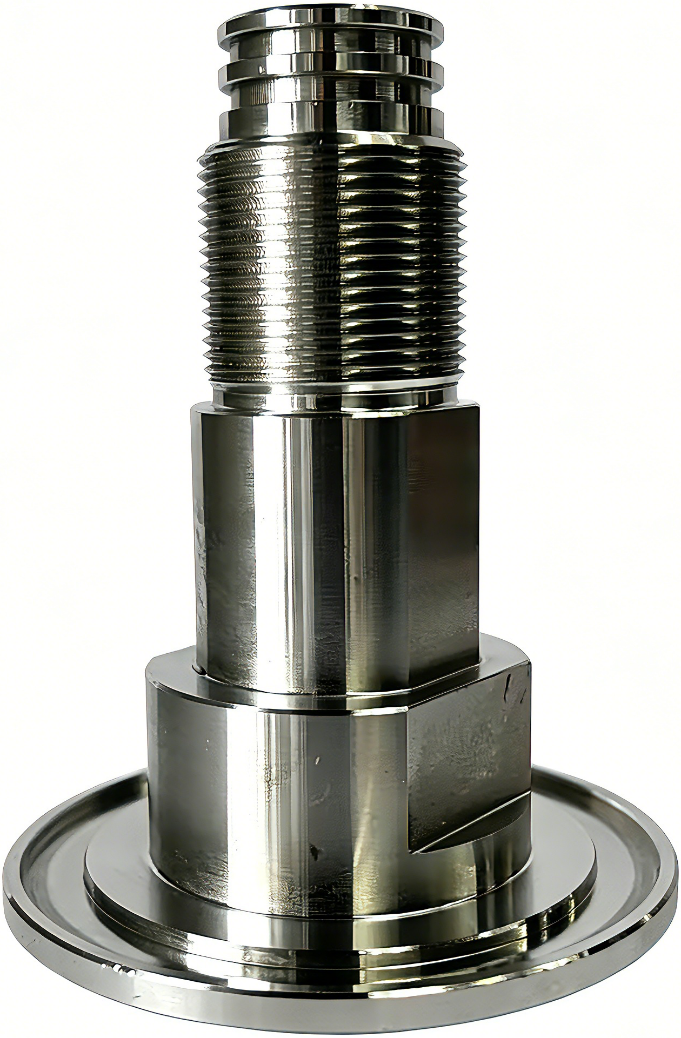
Figure 1: Finished 6061 aluminum alloy lifting sleeve. Note the precision thread profile and the pristine top mating surface.
Every engineer embedded in the New Energy Vehicle (NEV) battery pack supply chain feels the exact same pressure: components must adhere to razor-thin tolerances, satisfy uncompromising safety parameters, and support aggressive production ramps—all while driving down the cost curve.
I recently performed a deep dive into the cost architecture of a central lifting sleeve utilized for structural hoisting and securing during pack assembly. It was a textbook case of an "over-engineered" component. The legacy process relied on solid 6061 aluminum bar stock subjected to full CNC subtractive machining. While functionally sound, it was incredibly slow, yielded high scrap rates, and carried a steep price tag—costing us roughly RMB 50 (~USD 7) per unit.
When a single production line requires thousands of these structural joints, that cost trajectory quickly becomes unsustainable.
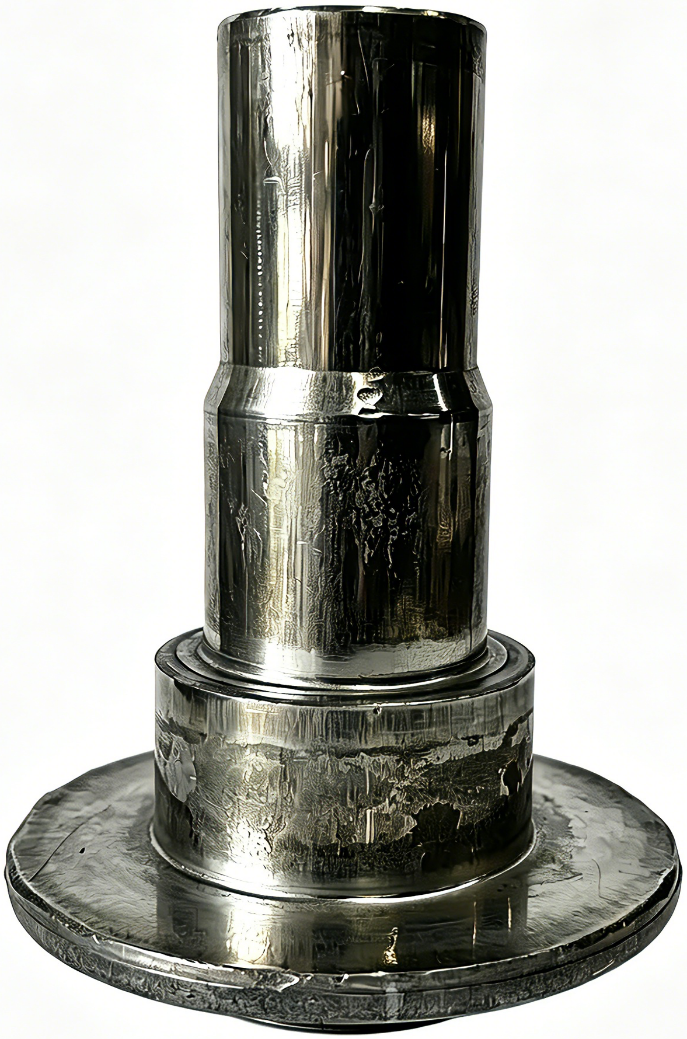
Figure 2: The cold-headed near-net-shape blank. Completely formed with zero chips and near-zero material waste, requiring only minimal finish-machining.
We took a step back to analyze its geometry. The part is essentially a hollow, flanged sleeve—a shape practically born for plastic deformation processing. Instead of cutting away 50% of our expensive raw metal from a solid bar, we engineered a hybrid process: Near-Net-Shape Cold Heading + Micro-Post-Machining.
The optimized workflow is highly streamlined:
-
Near-Net-Shape Blanking: High-speed cold headers form the fundamental geometry (see Figure 2). The process is rapid, exceptionally repeatable, and achieves a 98% material utilization rate.
-
Precision Finish-Machining: Utilizing the cold-headed blank as a baseline, we introduce a few lightning-fast CNC stations to single-point turn the top precision threads and face the mating seat (see Figure 1).
The Bottom-Line Commercial Impact
The cost differential is staggering. The total processing cost has dropped to approximately RMB 20 (under USD 3) per piece. That represents an immediate RMB 30 cost savings per sleeve.
But the dividends extend far beyond the unit price.
Efficiency: A 5x Throughput Acceleration
Under the legacy full-CNC protocol, each piece tied up a machine for a full 20 minutes. With our upgraded cold heading process, the primary blank is formed in a matter of seconds. Even when accounting for the optimized CNC finish-machining, the total cycle time per piece has been compressed to under 4 minutes.
What does this mean for a live assembly environment? A single production line can now pump out over 300 units per day instead of a meager 60. That is a 5x throughput boost achieved with zero capital expenditure on additional floor space or machinery.
The Engineering Bonus: Superior Structural Integrity
When you are engineering a primary lifting point for an EV battery pack, structural strength is completely non-negotiable.
Machining a component fully out of 6061 bar stock severely compromises the metal's natural internal grain flow lines. Severing these lines introduces localized stress-concentration zones, rendering the joint vulnerable to stress cracking under cyclic loading or high-tonnage lifting stresses.
Figure 3: Unbroken grain flow line contouring the part profile, delivering significantly enhanced structural strength.
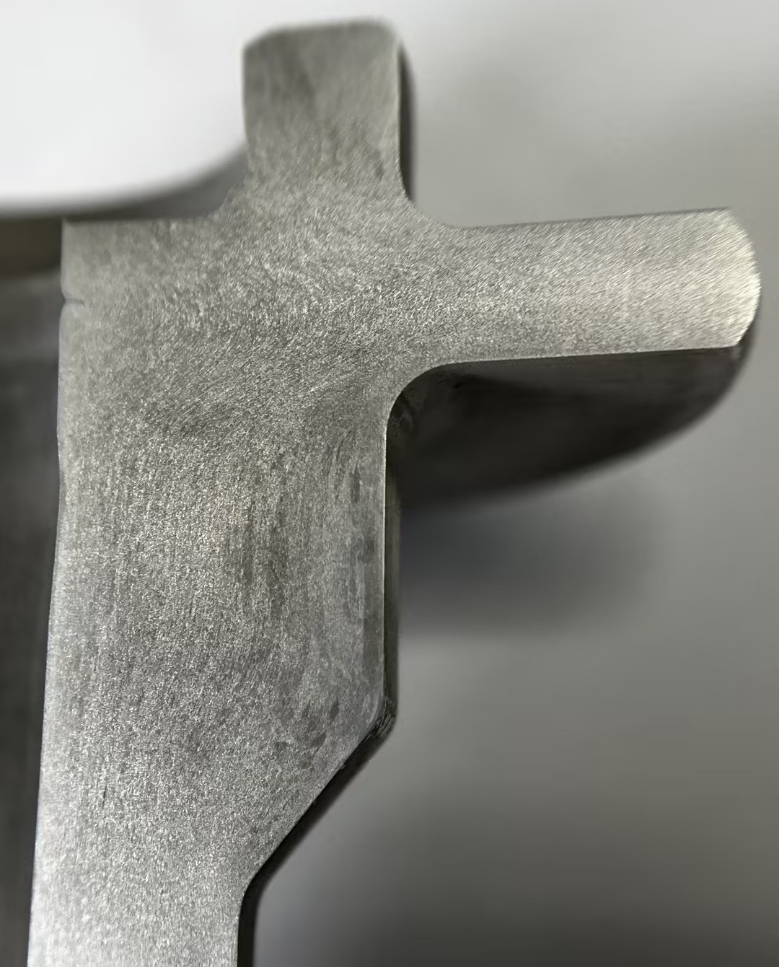
Cold heading operates on the exact opposite mechanical principle. It deforms the metal under immense compressive forces, causing the grain flow lines to structurally consolidate and mirror the external geometry of the part. The grain flow remains continuous and entirely unbroken, wrapping seamlessly around the flange, the sleeve barrel, and the hex flats (see Figure 3).
In our destructive tensile testing, the cold-headed variants consistently demonstrated superior resistance to stress fracture compared to their full-CNC counterparts. For a safety-critical lifting point carrying a massive EV battery pack, this isn't just a marginal gain—it is a vital insurance policy.
Conclusion: Cold-Headed Sleeves are Cheaper, Faster, and Stronger
A Crucial Takeaway for Design Engineers
If you are currently designing or sourcing battery pack lifting points, structural brackets, or similar mechanical hardware, stop defaulting to "CNC" by muscle memory.
The hybrid architecture of cold heading for near-net-shape geometry combined with minimal CNC post-machining for precision interfaces is a proven cost killer, time saver, and strength multiplier. We have successfully field-proven this application on 6061 aluminum alloy, stripping massive costs out of the Bill of Materials (BOM) while delivering a safer, more rugged joint.
Want to audit your existing component catalog for this process transformation? Reach out to our engineering team today for a rapid Design for Manufacturability (DFM) review. Sometimes, the biggest savings come from changing the way you generate your chips.
About Us
YF Zhichengjia (YF ZCJ) has been a driving force in precision fastening for over 20 years, serving as a strategic, long-term partner to global Top 5 consumer electronics brands and premier NEV OEMs. Today, we are deploying our core competencies in structural lightweighting, anti-loosening, and ultra-high-tensile engineering into next-generation frontiers like the low-altitude economy and humanoid robotics. Driven by proprietary innovations—including Grade 6.8 high-strength aluminum alloy bolts, tangless screw thread inserts, and "Cold Heading Instead of CNC" process migrations—we deliver one-stop precision joint solutions from prototype to aftermarket, continuously driving down Total Cost of Ownership (TCO) across the entire product lifecycle.
More Blog
- Type 308 Self-Tapping Insert: One-Shot Hi
- How Cold Heading Slashed EV Battery Lifti
- ZT68 600MPa Cold-Headed High-Strength Alu
- ZT68 600MPa Cold-Formed High-Strength Alu
- Precision Crafting for a Lightweight Futu
- Yingfeng Zhichengjia Newly Customized Spr
- R&D of ultra-high strength aluminum a
- One-stop fastening and connection solutio