
R&D of ultra-high strength aluminum alloy bolts

With the explosive growth of frontier industries such as New Energy Vehicles (NEVs), the Low-Altitude Economy (UAVs/eVTOLs), liquid-cooled AI servers (HPC), and humanoid robotics, "lightweighting" and "high reliability" are no longer mutually exclusive. Instead, they have converged to become the core metrics evaluating modern precision fastening technology.
Today, I will dissect our high-strength aluminum alloy bolts across three dimensions—metallurgy, manufacturing processing, and mechanical behavior—to reveal the "hardcore" engineering behind high-performance fasteners.
01 | Breaking Performance Barriers: The Metallurgical and Mechanical Matrix of ZT68
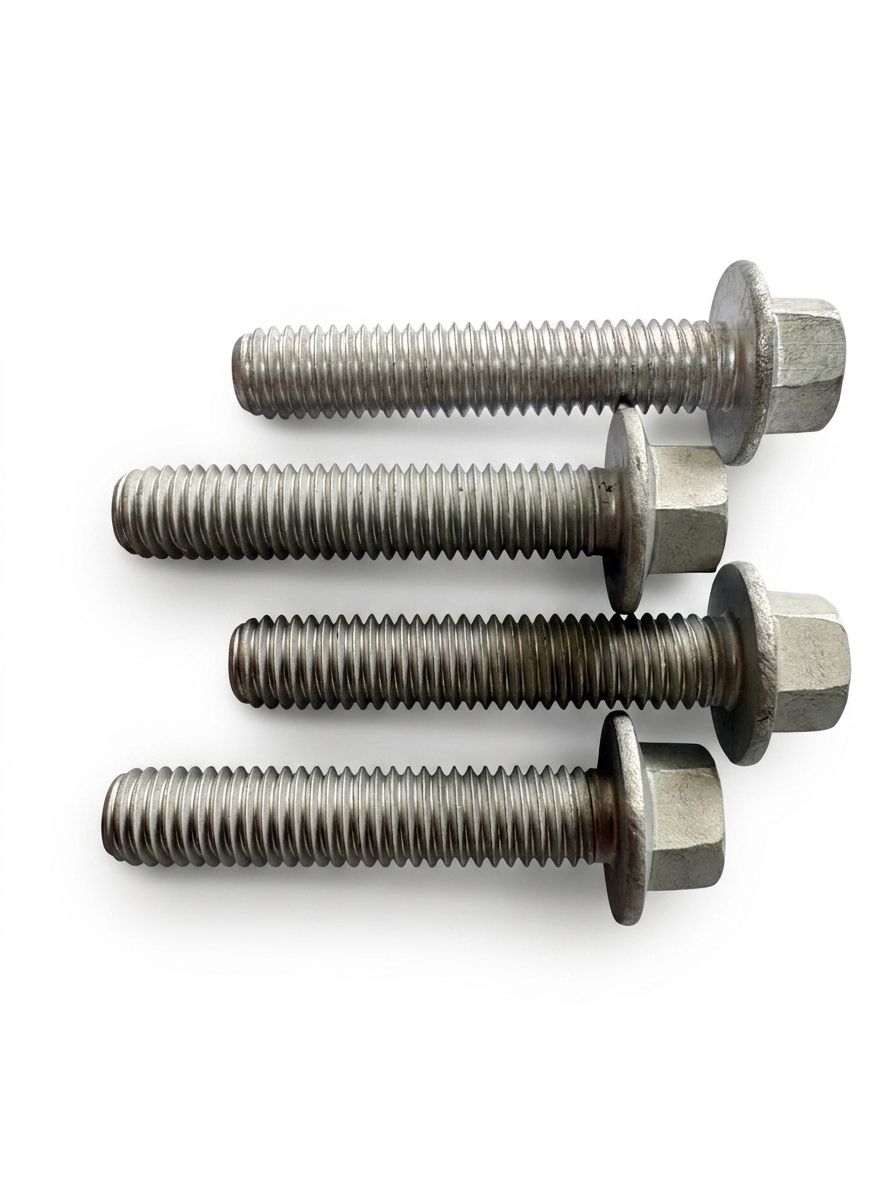
Conventional aluminum alloy fasteners typically suffer from low tensile strength, restricting their application to non-structural, cosmetic, or secondary connections. To achieve true "steel-to-aluminum substitution," engineers must modify the crystalline structure and strengthening mechanisms of the material.
Key Room-Temperature Mechanical Properties of ZT68
-
The Ultimate Strength-to-Toughness Ratio: Our ZT68 aluminum alloy bolts achieve a stable tensile strength ($R_m$) of approximately 630 MPa and a yield strength ($R_{p0.2}$) of around 515 MPa. This successfully elevates the material beyond the performance thresholds of standard carbon steels (such as Class 4.8 and 6.8) and approaches the upper limits of quenched and tempered medium-carbon steels. Concurrently, its elongation at break ($A$) maintains a high level of >6%. This exceptional strength-to-toughness ratio ensures that when the bolt is subjected to high clamp loads, it possesses both superior resistance to tensile fracture and sufficient capacity for plastic deformation buffering.
-
A Manufacturing Milestone: ISO/GB 6h Thread Tolerance: The thread tolerance zone is the lifeline of a fastener. ZT68 strictly adheres to the ISO/GB 6h high-precision standard. Implementing a stable 6h thread precision on aluminum alloy—a material characterized by relatively high plasticity—poses immense technical challenges for mold precision and thread-rolling pressure control. This precise 6h fit guarantees uniform thread engagement during assembly, eliminates stress concentration, and significantly enhances anti-loosening performance.
-
Stable Tightening Characteristics: In mechanical assembly, when a steel bolt transitions from elastic deformation to yield deformation, its stress-strain curve exhibits an extremely steep slope. This results in a narrow assembly window where overtightening and excessive elongation can easily occur. In contrast, aluminum alloy bolts like the ZT68 feature a much flatter curve with minimal stress variance upon entering the yield zone. This unique tightening characteristic provides automated assembly lines (such as automotive powertrain and battery pack tightening systems) with a wider, safer margin for torque-angle control.
02 | Foundations of Craftsmanship: The Critical Process Chain of High-Strength Aluminum Bolts
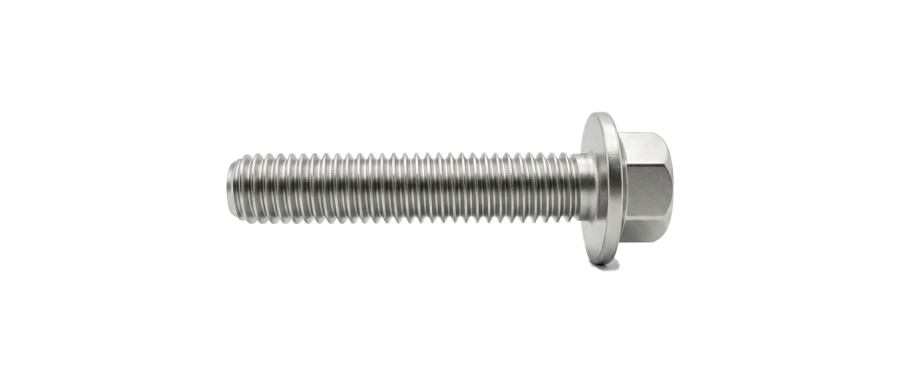
"Material is the foundation; process is the core." The birth of a high-performance ZT68 bolt requires a sequence of rigorously synchronized manufacturing phases. At YF Zhichengjia, we consistently implement the high-difficulty routing of "thread rolling after heat treatment."
1. Cold Heading and Grain Flow Continuity
We utilize multi-station cold heading machines for high-efficiency manufacturing. The essence of the cold heading process lies in utilizing the plastic deformation of the metal to ensure that the internal grain flow lines continuously follow the external contour of the bolt. Compared to traditional CNC machining—which cuts through and disrupts these grain lines—cold heading increases the fatigue strength of the head-to-shank transition zone by several times.
2. Precision Solute Treatment and Age Hardening (Advanced T6 Process)
The ultra-high strength of aluminum alloys originates from the precipitation of microscopic strengthening phases.
-
Solution Treatment (480–530°C): The bolts are heated to an elevated temperature to fully and uniformly dissolve alloying elements (such as Mg, Si, and Cu) into the aluminum matrix, forming a supersaturated solid solution. This high-energy state is then locked in via rapid quenching.
-
Age Hardening (150–200°C for several hours): During a prolonged holding period at a lower temperature, fine, atomized strengthening phases (such as $Mg_2Si$ and $Al_2Cu$) precipitate microstructurally. These secondary phases act like "pins" anchored at the grain boundaries, severely impeding dislocation movement and pushing the tensile strength to its peak of 630 MPa.
3. Thread Rolling Post-Heat Treatment
To minimize die wear, many manufacturers prefer to roll threads before heat treatment. However, YF Zhichengjia firmly insists on rolling threads after heat treatment.
-
Introducing Residual Compressive Stress: Under the powerful pressure of the thread-rolling dies, the thread roots of the pre-hardened material undergo significant plastic work hardening and gain high residual compressive stress. Because fasteners primarily experience tensile stress under load, the compressive stress at the thread root perfectly counterbalances external tensile forces. This mitigates the "notch effect" and dramatically extends the fatigue life of the bolt.
-
Mitigating Intergranular Corrosion and Thread Damage: Rolling threads after heat treatment prevents surface oxidation and grain coarsening that can occur under high-temperature thermal processing, ensuring optimal density, integrity, and surface finish of the threads.
03 | Extreme Applications: Overcoming Two Major Pain Points in Modern Industry
In real-world engineering, ZT68 high-strength aluminum alloy bolts provide an obvious lightweighting advantage by reducing weight by 2/3 (as the material density is only one-third that of steel). More importantly, they address core underlying design bottlenecks for engineers.
1. Eradicating Galvanic Corrosion (Electrochemical Corrosion)
When carbon steel bolts directly contact magnesium or aluminum components (such as NEV battery pack enclosures or reducer housings) in humid or salt-spray environments, the large potential difference between iron and magnesium/aluminum creates micro-galvanic cells. This causes severe galvanic corrosion, leading to the degradation of housing edges and the stripping of internal threads.
Because the electrochemical potential of ZT68 is highly compatible with or identical to that of aluminum and magnesium components, virtually no galvanic corrosion occurs when they are mated. This delivers a decisive safety advantage for NEV chassis and electric drive systems.
2. Achieving "Short Thread Engagement" in Ultra-Compact Spaces
Due to material mismatches, when traditional carbon steel bolts are used in magnesium or aluminum components, the thread engagement length typically must reach >2–3d (where d is the nominal thread diameter) to prevent the softer base material from stripping.
Conversely, when ZT68 aluminum alloy bolts are paired with aluminum or magnesium components, the optimal thread engagement length is reduced to just 1.3–1.5d. This enables design engineers to reduce blind hole depths and thin out housing bosses—releasing invaluable structural space in tightly packed applications like humanoid robot joints and HPC AI servers.
04 | Value Proposition: Beyond Connections—Optimizing Total Cost of Ownership (TCO)
In the fastener industry, there is a well-known "15-85 Law." During procurement, many enterprises focus excessively on the 15% representing "visible acquisition costs" while overlooking the 85% comprising "hidden costs"—which include design iteration, logistics, quality inspection, warranty claims, and rework caused by galvanic corrosion.
The earlier technical expertise is integrated into the design phase, the more pronounced the life-cycle cost reduction will be.
YF Zhichengjia does not merely supply premium ZT68 bolts. Leveraging our four global manufacturing bases and over 20 years of design expertise, we provide global customers with a comprehensive, one-stop technical service framework encompassing rapid engineering prototyping, professional teardown analysis, co-design support, and continuous process optimization (such as converting CNC processes to cold heading). We do not just help your products break performance boundaries; we are dedicated to optimizing your Total Cost of Ownership (TCO) across the entire product life cycle.
Official Website Technical Interaction:
If you are currently facing fastening and connection challenges—such as weight reduction in NEV battery packs, anti-loosening in humanoid robot joints, or corrosion resistance in low-altitude aerospace vehicles—please leave a comment below or contact our team directly. We will engineer a customized ZT68 high-strength aluminum alloy connection solution tailored to your application.
YF Zhichengjia (YF ZCJ) — An innovator and leader in precision fasteners, serving global customers with optimized TCO and ultra-fast response times.
More Blog
- Type 308 Self-Tapping Insert: One-Shot Hi
- How Cold Heading Slashed EV Battery Lifti
- ZT68 600MPa Cold-Headed High-Strength Alu
- ZT68 600MPa Cold-Formed High-Strength Alu
- Precision Crafting for a Lightweight Futu
- Yingfeng Zhichengjia Newly Customized Spr
- R&D of ultra-high strength aluminum a
- One-stop fastening and connection solutio