
ZT68 600MPa Cold-Formed High-Strength Aluminum Alloy Bolts

Driven by the dual-carbon targets and range improvement demands of new energy vehicles (NEVs), magnesium alloy die-cast lightweight solutions have been widely deployed in mass production. Key components including battery trays, electric drive housings and chassis die castings are now mass-installed on finished vehicles.
Nevertheless, poor compatibility of conventional fasteners creates a major technical barrier restricting the large-scale industrial application of magnesium lightweight structures, which stems from two critical industry challenges:
1. Severe galvanic corrosion at steel-magnesium dissimilar joints:Magnesium alloys carry an electrode potential of -1.6 V, while carbon steel stands at only -0.44 V, resulting in a substantial potential difference. In service environments featuring high humidity, water immersion and internal condensation, galvanic cells readily form. This corrodes magnesium substrates and erodes internal threads, further triggering component leakage and structural failure, and drastically shortening the service life of core vehicle parts.
2. Thermal expansion mismatch causes loosening under alternating cyclic loads:Magnesium alloys have a coefficient of thermal expansion twice that of carbon steel. During vehicle operation, repeated temperature fluctuations plus vibration from engine startup and shutdown lead to inconsistent deformation between steel bolts and magnesium substrates, causing continuous preload loss. This frequently results in sealing failure, abnormal rattling noise and bolt loosening, impairing vehicle NVH performance and structural safety.
The widely adopted 6056 (420 MPa) conventional aluminum bolts in the market can only marginally mitigate corrosion issues, yet suffer from insufficient mechanical strength and limited load-bearing capacity. They fail to meet the rigorous operating requirements of NEV three-electric systems that demand high tightening torque, heavy load resistance and extended service life, and cannot support mass assembly of high-end magnesium lightweight architectures.
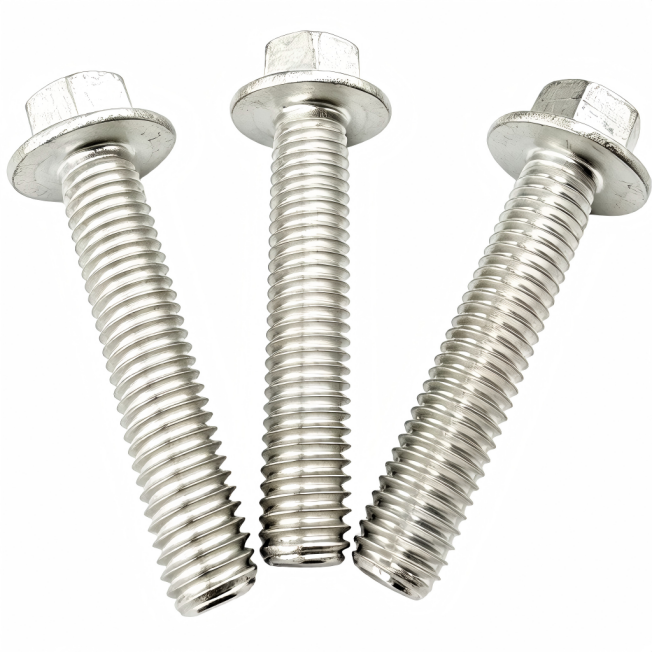
With over 20 years of R&D and mass manufacturing experience in precision fasteners, YF Zhichengjia has independently developed the ZT68 600 MPa cold-formed high-strength aluminum alloy bolt. This product resolves three core challenges of magnesium alloy joining: galvanic corrosion, bolt loosening and inadequate structural strength, delivering a highly reliable dedicated fastening solution for NEV lightweight design.
I. Superior Core Performance: Outperforming Traditional 6056 Aluminum Bolts Across All Metrics
All tests are benchmarked on standard M8×40 hexagon flange bolts. The ZT68 600 MPa high-strength aluminum alloy bolt delivers comprehensive improvements in tensile performance, ductility and operational stability, with mechanical properties far exceeding conventional industry-grade 6056 (AL9) 420 MPa aluminum fasteners:
|
Performance |
ZT68 600 MPa High-Strength Aluminum Alloy Bolt |
Industry Standard 6056 (AL9) 420 MPa Aluminum Alloy Bolt |
Performance Improvement Margin |
|
Ultimate Tensile Strength (Rm) |
~630 MPa |
~420 MPa |
~+50% |
|
0.2% Proof Strength (Rp0.2) |
~500 MPa |
~350 MPa |
~+43% |
|
Yield-to-Tensile Ratio |
~0.8 |
~0.85 |
Higher plastic margin |
|
Elongation at Break |
≥8% |
≥6% |
Balances high strength and stable ductility |
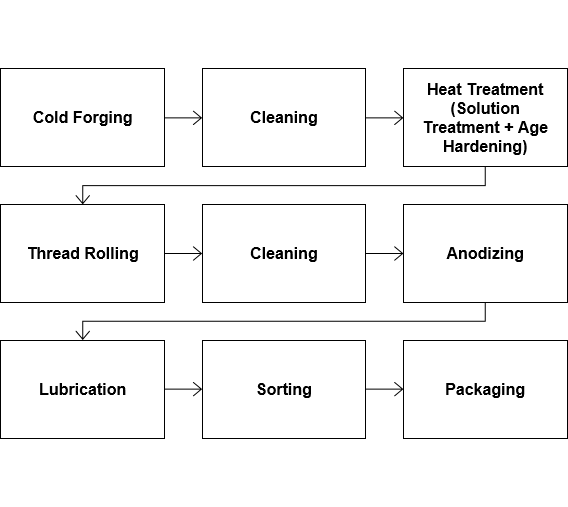
1. Excellent structural toughness, high-temperature stability and fatigue resistance:The material maintains uniform hardness with minimal stress concentration and outstanding resistance to high-frequency vibrational fatigue. It sustains mechanical strength above 600 MPa under long-term exposure to 150 °C without creep or preload relaxation, making it suitable for the high-temperature operating environments of three-electric systems.
2. Electrode potential matching eliminates galvanic corrosion:Its electrode potential aligns closely with magnesium alloys, eliminating inherent corrosion risks associated with carbon steel fasteners. The bolt passes intergranular corrosion tests; paired with proprietary anodizing surface treatment, it consistently withstands 60 consecutive days of neutral salt spray testing. It offers long-term anti-corrosion performance for high-humidity, corrosion-prone electric drive assemblies and battery packs.
3. Synchronized thermal deformation prevents loosening, leakage and abnormal noise:Its thermal expansion coefficient closely matches magnesium alloys to enable coordinated dimensional variation under thermal cycling. This significantly reduces preload attenuation, fundamentally eliminating bolt loosening, assembly leakage and rattling noise to enhance overall structural reliability.
4. High dimensional consistency compatible with automated mass assembly:Equipped with a proprietary triple-stage lubrication system, the bolt stabilizes the friction coefficient within a range of 0.09 to 0.15, delivering consistent tightening torque with low torque scatter for seamless integration into fully automatic assembly lines. All products are manufactured in-house via full-process cold forging, outperforming machined counterparts with complete traceability of production quality records.
5. Lightweight construction extends vehicle cruising range:Fabricated from low-density aluminum alloy (2.7g/cm³), the bolt achieves significant weight reduction compared to conventional steel fasteners. Mass integration into vehicles improves cruising range by 6% to 8%, fully aligning with NEV development targets of lightweight design, energy consumption reduction and extended driving mileage.
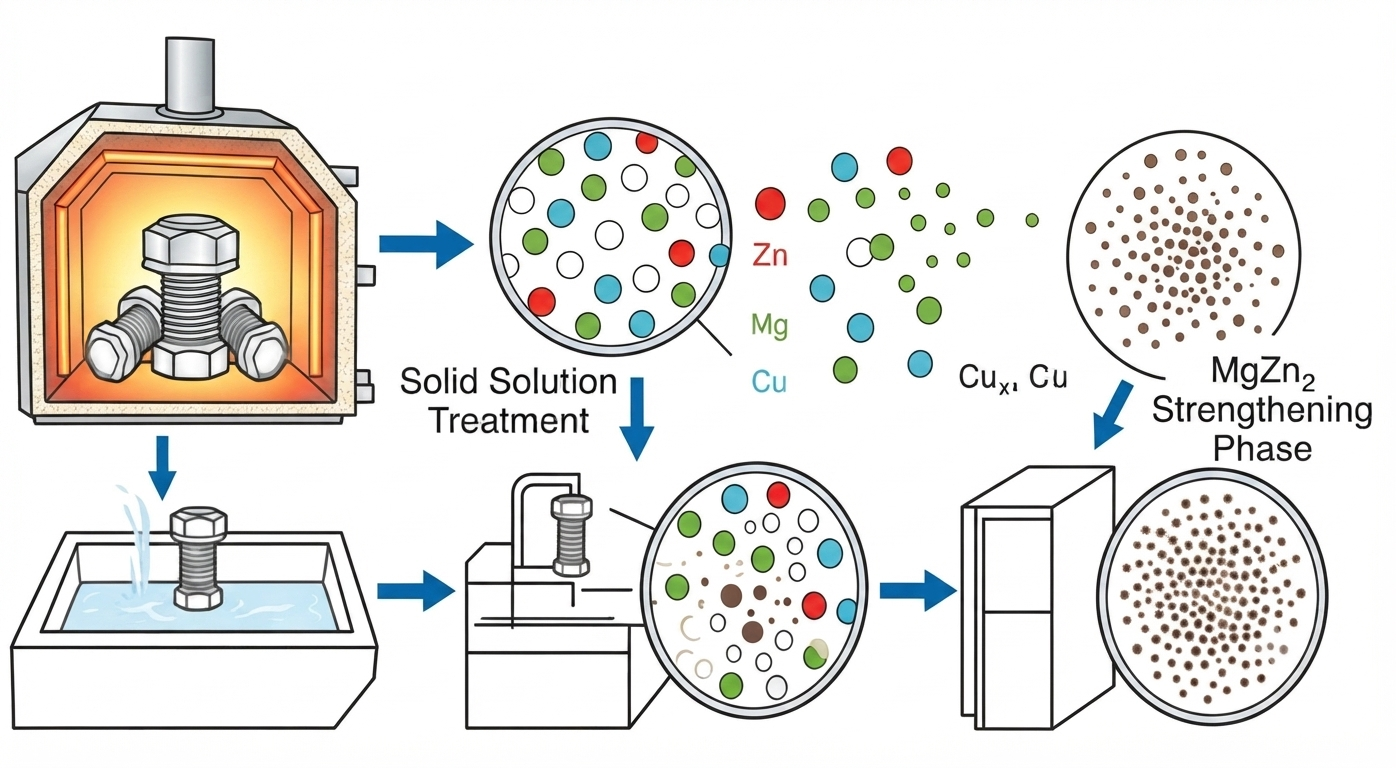
Heat Treatment Process of ZT68 600 MPa Cold-Formed High-Strength Aluminum Alloy Bolts
II. Core Application Scenarios
Custom engineered for magnesium and aluminum lightweight structures of new energy vehicles, this product withstands harsh operating conditions including thermal cycling, high-frequency vibration and humid corrosive environments. Primary application areas include:
1. Electric Drive Systems: Fastening joints for magnesium motor housings, reducer flanges and ECU enclosures
2. Power Battery Systems: Structural connections for magnesium battery trays, pack frame borders and water cooling plates
3. Lightweight Chassis Components: Fastening for magnesium-aluminum control arms, steering knuckles, subframes and other chassis structures
4. Large-Scale Magnesium Die-Cast Parts: Mounting for instrument panel frames and large lightweight interior structural castings
Lightweight magnesium alloy construction has become an unavoidable development trend for new energy vehicles. Conventional steel bolts and low-strength 6056 aluminum fasteners can no longer satisfy automotive OEM requirements for superior structural reliability, long service life and longer cruising range.
Manufactured by YF Zhichengjia Precision Hardware (Shenzhen) Co., Ltd., the ZT68 600 MPa high-strength cold-formed aluminum alloy bolt adopts self-developed modified aluminum alloy material, breakthrough cold forging forming technology and full-spectrum rigorous performance testing to resolve key technical limitations in magnesium alloy lightweight joining. We supply automakers with an integrated fastening solution that is lighter, stronger, more dimensionally stable and highly durable, supporting OEMs in advancing vehicle lightweight architecture, upgrading product quality and optimizing overall production efficiency.
More Blog
- Type 308 Self-Tapping Insert: One-Shot Hi
- How Cold Heading Slashed EV Battery Lifti
- ZT68 600MPa Cold-Headed High-Strength Alu
- ZT68 600MPa Cold-Formed High-Strength Alu
- Precision Crafting for a Lightweight Futu
- Yingfeng Zhichengjia Newly Customized Spr
- R&D of ultra-high strength aluminum a
- One-stop fastening and connection solutio