
One-stop fastening and connection solutions for light alloy

In the modern industrial manufacturing ecosystem, the explosive growth of frontier sectors—such as New Energy Vehicles (NEVs), the Low-Altitude Economy, High-Performance Computing (HPC) AI servers, and embodied AI (humanoid robotics)—is exposing fastening and joining technologies to unprecedented, extreme operating conditions. As the "eyes of industry and bones of machinery," the role of the fastener has evolved from a conventional commodity part into a highly customized, systemic solution integrating materials science, precision machining, surface engineering, and mechanical simulation.
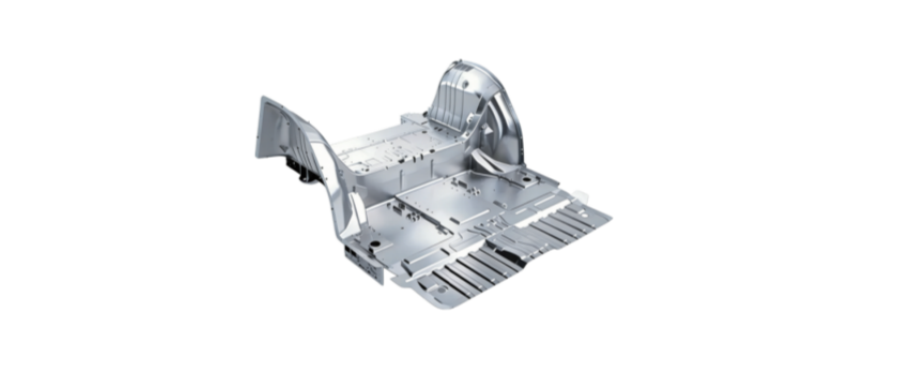
This article provides a deep dive into the evolutionary path and application standards of precision fastening and joining technology across three core dimensions: product matrices, cutting-edge applications, and Total Cost of Ownership (TCO) engineering.
PART 01 | Light-Alloy Fastening Product Matrix and Core Technologies
Driven by global lightweighting trends, the penetration rate of aluminum alloys, magnesium alloy die-castings, and composite materials in high-end manufacturing continues to climb. However, the low base-material strength, susceptibility to thread stripping, and high risk of galvanic corrosion inherent to light alloys impose rigorous demands on joining designs. To address the specific challenges of light-alloy die-casting, three core product systems have emerged in the market:
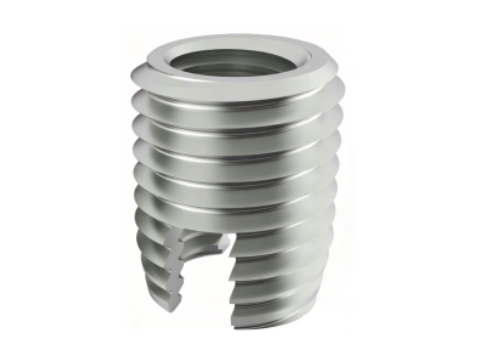
1. Light-Alloy Thread Reinforcement Systems (Thread Inserts)
-
Materials & Structures: Primarily available in carbon steel and stainless steel variants, these inserts are engineered to reinforce tapped holes in low-density alloy castings and extruded profiles.
-
Mechanical Performance Enhancement: By reinforcing the base metal's tapped hole with a thread insert, the overall pull-out strength and fatigue life are significantly boosted. This elevates the shear resistance of light-alloy substrates to match the standard strength of Property Class 8.8 or even 12.9 fasteners.
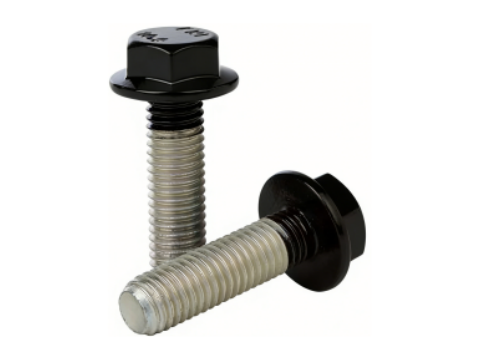
2. Magnesium/Aluminum Alloy Anti-Galvanic Corrosion Systems
-
Metallurgical Matching: Addressing the critical industry pain point where magnesium alloys suffer severe galvanic corrosion when contacting dissimilar metals, high-strength aluminum alloy bolts (such as Class 8.8 equivalent aluminum fasteners) are utilized as the mating pair to fundamentally minimize the electrochemical potential differential.
-
Physical Isolation Barriers: By pre-applying anti-galvanic corrosion sealants/coatings to the bolt head and critical bearing surfaces, a physical isolation zone is constructed, eliminating electrochemical corrosion driven by environmental media like moisture and salt spray.
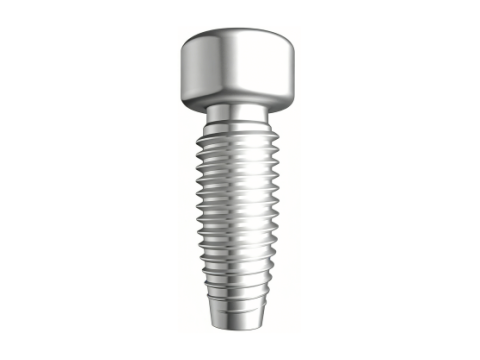
3. Self-Tapping and Self-Extruding (Thread-Rolling) Screw Systems
-
Process Flow Simplification: This system allows light-alloy die-cast substrates to utilize cast core holes directly, completely eliminating secondary tapping operations.
-
Interference Anti-Loosening Mechanism: As the screw is driven directly into the core hole, it plastically deforms and rolls a mating thread in the substrate. This interference fit provides exceptional dynamic anti-loosening performance and robust resistance to vibration-induced pull-out.
PART 02 | Full-Stack Fastening Solutions for Mid-to-High-End Markets
YF Zhichengjia’s full-stack product portfolio extensively covers multiple strategic emerging sectors:
| Strategic Industry | Key Application Positions / Components | Core Technical Challenges Addressed |
| New Energy Vehicles (NEVs) | Battery pack enclosures, electric drive/reducer housings, chassis structural components | Weight reduction via steel-to-aluminum substitution, high-vibration sealing, galvanic corrosion prevention |
| Low-Altitude Economy (UAVs/eVTOLs) | Carbon fiber airframes, motor mounts, avionics bays | Extreme strength-to-weight ratios, micro-vibration resistance, high salt-spray atmospheric corrosion resistance |
| HPC AI Servers | Liquid-cooling cold plates, high-density backplanes, power distribution blocks | Zero-particle contamination, blind-mate precision, ultra-short thread engagement in space-constrained slots |
| Humanoid Robotics | Harmonic/cycloidal drive joints, actuator assemblies, structural limbs | High dynamic fatigue resistance, structural weight optimization, ultra-compact spatial integration |
PART 03 | Life-Cycle Total Cost of Ownership (TCO) Engineering Based on the "15-85 Law"
In procurement and application decisions for precision hardware, focusing exclusively on the visible piece-price (unit cost) is a primary driver of late-stage engineering failures and runaway Quality Loss Costs.
1. The Decisive Impact of Early-Stage Engineering Intervention
During the conceptualization, scoping, and preliminary design phases of a project, the actual R&D financial outlay is minimal, yet its impact on the final life-cycle TCO reaches 100%. Without professional fastening design consultation at this stage, high hidden manufacturing and assembly costs become locked into the design. If joining quality issues are only discovered during the execution or operational phases, the cost of late-stage rectification and field-rework escalates geometrically.
2. Six Technical Services Driving Value Engineering
To conquer this challenge, using professional life-cycle TCO optimization models, technical intervention must be integrated across the entire workflow—from prototyping to aftermarket service:
-
Professional Design Consultation: Intervening at the concept phase to provide collaborative co-design and finite element analysis (FEA) simulation services, while establishing standardized fastener databases. This typically improves design efficiency by over 30%.
-
Rapid Engineering Prototyping: Utilizing full-process, closed-loop in-house manufacturing to deliver machined prototypes or functional alternative samples in as fast as 1 day, drastically compression R&D cycles.
-
Professional Teardown Analysis: Consolidating multiple loose components into multi-functional assembly parts and unifying drive recesses. This optimizes total costs by an estimated 10%+ while boosting safety performance by 15%+.
-
Continuous Process Optimization (Converting CNC to Cold Heading): Leveraging multi-station cold heading machines and strictly controlled full-process manufacturing (encompassing rolling, heat treatment, surface coating, and automated CCD optical sorting). Transitioning traditional CNC-machined sleeves and specialized custom components into cold-headed parts yields a potential cost-reduction space of up to 20%.
PART 04 | Conclusion
The essence of precision fastening technology extends far beyond achieving simple physical "joints." It lies in empowering manufacturing enterprises to achieve system-level objectives: breaking through performance barriers, minimizing weight, extending overall asset lifespans, and realizing maintenance-free designs.
Since its establishment in 2003, YF Zhichengjia has evolved into a niche-industry leader operating 4 manufacturing hubs—including its Shenzhen Pingshan headquarters, the Hubei Xiangyang automotive-specialty facility, and an overseas plant in Indonesia. Boasting an annual capacity of 6 billion units (500 million units monthly) and holding 26 valid patents, the company relies on its deeply anchored team of veteran technical staff (with personnel possessing over 5 years of tenure accounting for more than 46% of the workforce). The closed-loop ecosystem they have built—spanning technical training and design simulation through to volume cold-heading production—serves as a rock-solid foundation for global precision manufacturing to move toward high-end transformation and maximized cost-efficiency.
YF Zhichengjia (YF ZCJ) — An innovator and leader in the precision fastener sector, delivering optimized TCO and ultra-fast response times to global customers.
More Blog
- Type 308 Self-Tapping Insert: One-Shot Hi
- How Cold Heading Slashed EV Battery Lifti
- ZT68 600MPa Cold-Headed High-Strength Alu
- ZT68 600MPa Cold-Formed High-Strength Alu
- Precision Crafting for a Lightweight Futu
- Yingfeng Zhichengjia Newly Customized Spr
- R&D of ultra-high strength aluminum a
- One-stop fastening and connection solutio