
From Pure CNC to Cold Heading + Minimal Secondary Machining: A Case Study on 6061 Aluminum Alloy
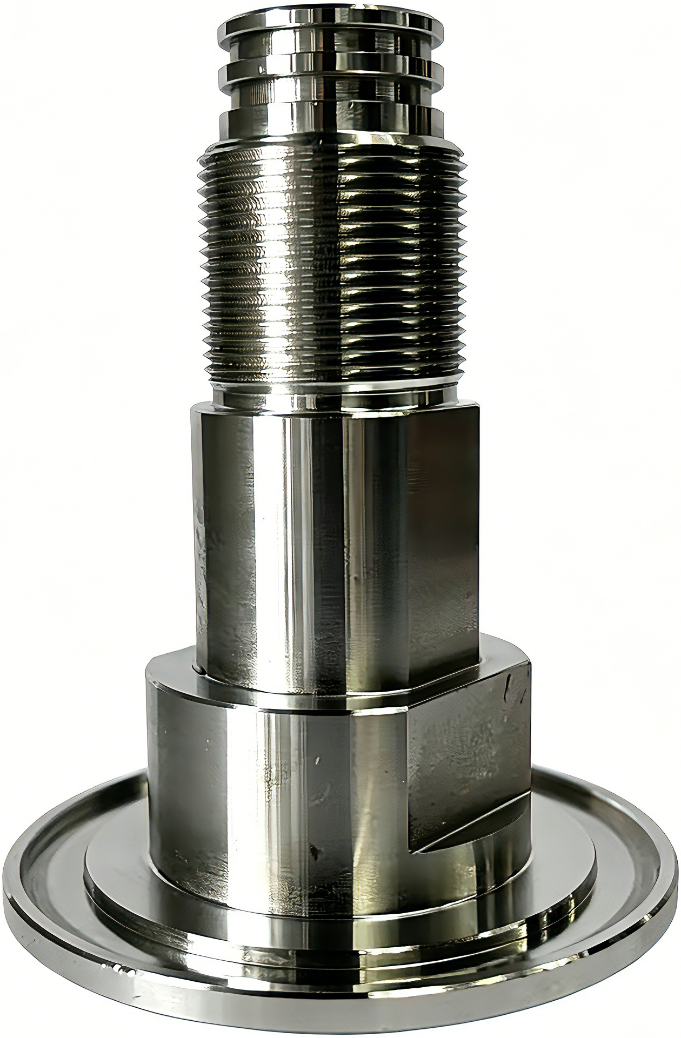
Figure 1: The finished 6061 aluminum alloy lifting sleeve. It requires precision threads and a smooth top mating surface.
Every engineer in the EV battery pack supply chain knows the pressure: parts must maintain strict tolerances, meet rigorous safety specs, handle massive volumes, and—crucially—drive costs down.
I recently conducted a deep-dive cost analysis on a central lifting sleeve (used for hoisting and securing battery packs during assembly). This is a classic case of an "over-engineered" part. The traditional method involved pure CNC machining from solid 6061 aluminum bar stock. While functional, it was slow, generated significant material waste, and naturally came with a hefty price tag—our cost per part was around 50 RMB (approx. $7 USD).
Considering a single production line requires thousands of these parts, those costs add up rapidly.
Figure 2: The cold-headed blank. Near-net shape achieved with minimal machining required. No chips, no material waste.
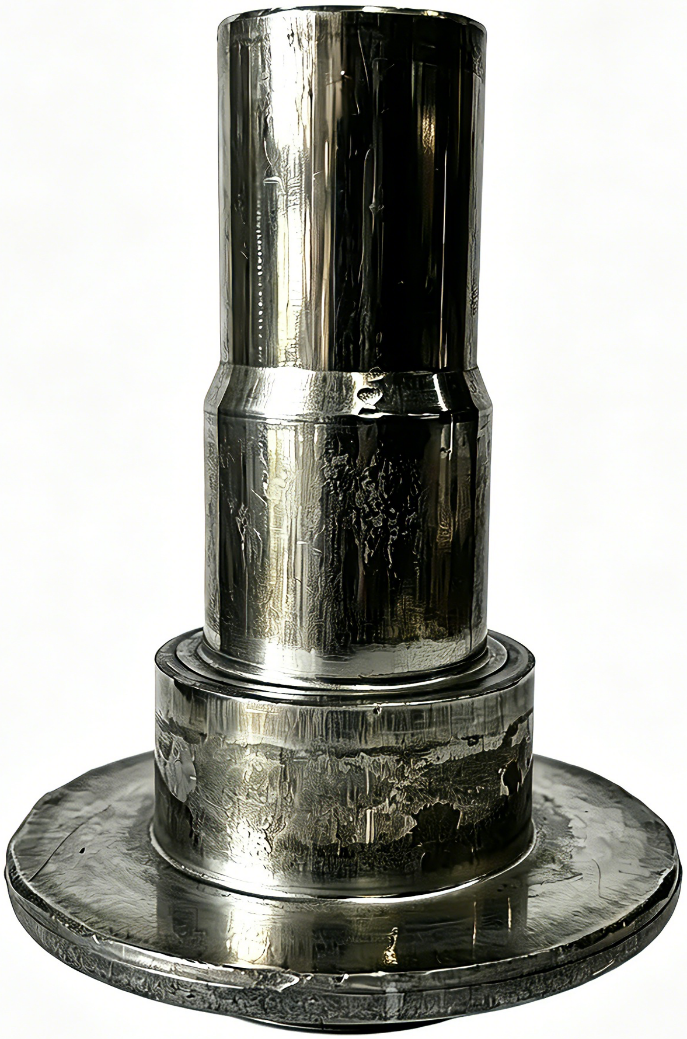
So, we took a fresh look at its geometry. It’s a hollow sleeve with a flange—a shape practically born for cold heading. Instead of cutting away 50% of the metal from a solid bar, we switched to a hybrid process: Cold Heading + Secondary Machining.
The workflow is straightforward:
The Real Impact on the Bottom Line
The cost difference is striking. The total process cost is now approximately 20 RMB per part (under $3 USD). That’s a saving of 30 RMB on every single lifting sleeve.
The cost difference is striking. The total process cost is now approximately 20 RMB per part (under $3 USD). That’s a saving of 30 RMB on every single lifting sleeve.
But the savings go beyond just cost.
Efficiency: 5x Faster Production Speed
With the old pure CNC route, each part took 20 minutes. Now, with cold heading, the blank is formed in just seconds. Even adding the simplified CNC finishing, the total cycle time is under 4 minutes.
What does this mean for actual production? A single line can now output over 300 parts per day, compared to the previous 60. That’s a 5x increase in output—without adding extra equipment or floor space.
With the old pure CNC route, each part took 20 minutes. Now, with cold heading, the blank is formed in just seconds. Even adding the simplified CNC finishing, the total cycle time is under 4 minutes.
What does this mean for actual production? A single line can now output over 300 parts per day, compared to the previous 60. That’s a 5x increase in output—without adding extra equipment or floor space.
The Unexpected Bonus: Structural Integrity
If you are making a lifting point for a battery pack, strength is non-negotiable.
Pure CNC machining directly from 6061 bar stock cuts through the internal grain flow of the aluminum. Disrupted grain flow can create weak points—especially when subjected to repetitive stress or heavy load lifting.
If you are making a lifting point for a battery pack, strength is non-negotiable.
Pure CNC machining directly from 6061 bar stock cuts through the internal grain flow of the aluminum. Disrupted grain flow can create weak points—especially when subjected to repetitive stress or heavy load lifting.
Cold heading does the exact opposite. It forms the metal under high pressure, forcing the grain flow to follow the part's geometry. The grain flow remains continuous and unbroken, wrapping around the flange, body, and hex surfaces (see Figure 3).
Figure 3: Unbroken grain flow results in higher structural strength.
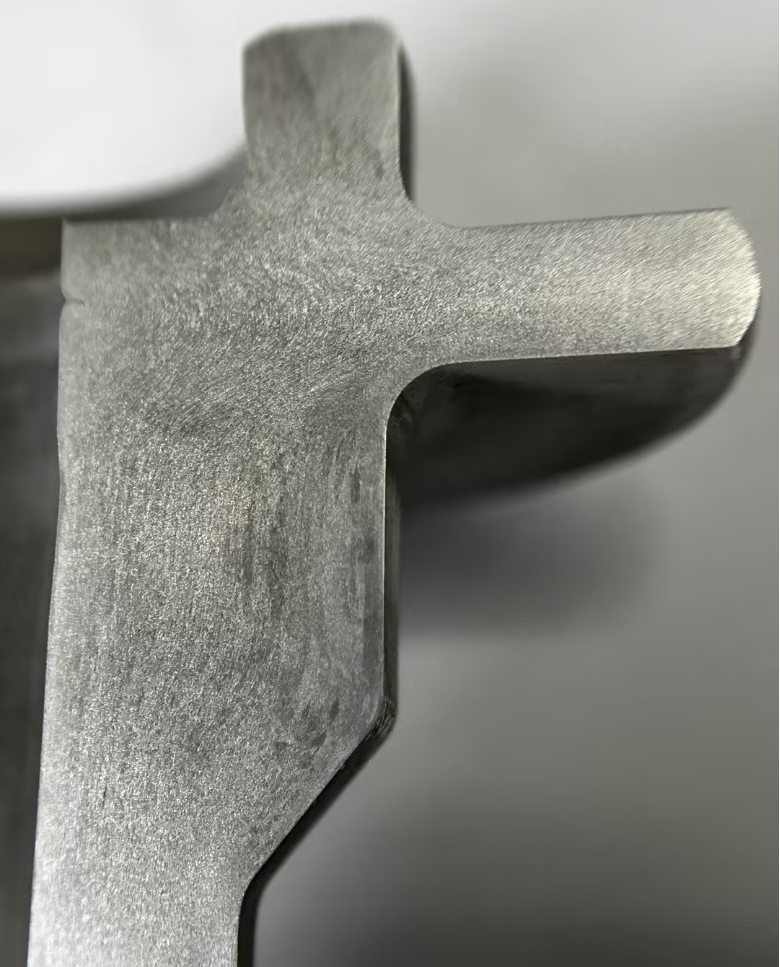
In our tensile tests, the cold-headed version demonstrated superior resistance to stress fracture compared to the pure CNC version. For a critical lifting point on a heavy EV battery pack, this isn't just a bonus—it's a safety feature.
Conclusion: The cold-headed sleeve is cheaper, faster to produce, and stronger.
A Note for Design Engineers
If you are designing or sourcing battery pack lifting points, brackets, or similar mechanical fasteners, stop defaulting to "CNC" without a second thought.
If you are designing or sourcing battery pack lifting points, brackets, or similar mechanical fasteners, stop defaulting to "CNC" without a second thought.
The hybrid process of Cold Heading (for the blank) plus minimal CNC (for precision mating surfaces) is a proven cost-killer, time-saver, and strength-booster. We have successfully applied this to 6061 aluminum alloy, delivering safer, more robust parts while significantly slashing BOM costs.
Want to try this approach on your parts? Feel free to reach out to us for a quick Design for Manufacturing (DFM) review. Sometimes, the biggest savings come from simply changing how you make chips.